Powered by
Dream Assurance
Powered by
Dream Assurance Group

Hauling cargo? It’s important to know how much weight your truck can handle.
That’s where Gross Vehicle Weight Rating (GVWR) comes in. It is the weight limit for your entire loaded truck.
Gross Vehicle Weight Rating is a weight limitation established by the manufacturer that specifies the maximum allowable weight for the entire loaded vehicle, including:
This refers to the weight of the truck by itself, excluding any cargo, passengers, or additional accessories.
The curb weight typically includes the weight of the engine, transmission, drivetrain, frame, axles, suspension, wheels, tires, body, interior seats and trim, and all essential fluids like engine oil, coolant, windshield washer fluid, and brake fluid. A full tank of gas is also included in the curb weight.
Payload weight refers to the total weight of everything you add to the truck after it reaches its curb weight.
This includes cargo, passengers, and any additional accessories you may have installed, such as a toolbox, bed liner, or tow hitch.
For trucks towing trailers, this refers to the downward force exerted by the trailer on the truck’s hitch. It’s typically around 10-20% of the total trailer weight.
The tongue weight is important to consider when calculating your overall GVWR because it adds to the weight that the truck’s front axle needs to support.

Essentially, GVWR is the total weight your truck can safely handle while maintaining stability, handling, and braking performance. It’s determined by considering the engineering limitations of the truck’s components like the vehicle’s frame, axles, suspension, and brakes.
Exceeding a vehicle’s GVWR can lead to a variety of safety hazards and legal issues.
Going over GVWR can pose multiple safety hazards, vehicle damage, and legal/financial troubles.
An overloaded vehicle is harder to handle, especially when braking, cornering, or maneuvering. This can lead to rollovers, loss of control, and collisions.
Furthermore, brakes are designed for a specific weight limit. Overloading increases stopping distance significantly, making it harder to avoid accidents.
Furthermore, excess weight puts immense strain on tires, increasing the risk of blowouts at highway speeds. This can cause loss of control and potentially lead to serious accidents.

Going over the gross vehicle weight rating can overwhelm the suspension system, leading to broken springs, worn-out shock absorbers, and a sagging vehicle. This can affect handling and stability.
The engine, transmission, and axles all work harder to move a heavier load. This can lead to premature wear and tear, increasing maintenance costs and potentially causing breakdowns.
The truck’s frame is designed to handle a specific amount of weight. Overloading can cause cracks or even bending of the frame, compromising the vehicle’s structural integrity.
Aside from the safety hazards and vehicle damage your truck can get while operating over the GVWR, getting caught overweight can result in hefty fines from law enforcement.
In extreme cases, trucks going over the gross vehicle weight rating can be impounded until the weight is brought within legal limits at the weigh station. This can cause delays and additional costs.
Furthermore, if you’re in an accident while overloaded, your insurance company may deny coverage or raise your rates.
Remember, the consequences of overloading go beyond just fines. It’s a safety risk that can have serious consequences for you, your cargo, and others on the road.
Although GVWR and load capacity are closely related, they are not the same thing.
Here’s how they differ:
As mentioned earlier, this is the total weight limit for your entire loaded truck, including:
The truck itself (curb weight)
Everything you put in it (cargo, passengers, equipment)
Fluids needed for operation (fuel, oil, coolant)
Think of GVWR as the total weight your truck can handle safely.
This refers specifically to the maximum weight of cargo you can add to your truck after accounting for the weight of the truck itself (curb weight), passengers, and fluids.
It’s essentially the available weight for your cargo within the overall GVWR limit.
For example:
If your truck’s GVWR is 10,000 lbs and the truck’s curb weight is 6,000 lbs, your load capacity would be 4,000 lbs (10,000 GVWR – 6,000 curb weight = 4,000 load capacity).

GVWR and GCWR are both weight ratings important for truck drivers, but they apply to different weights:
This focuses on the weight of the truck itself and its contents. It’s the maximum allowable weight for your entire loaded truck, including:
The truck’s weight without cargo (curb weight)
Passengers and any cargo you’re hauling
Fluids like fuel and engine oil
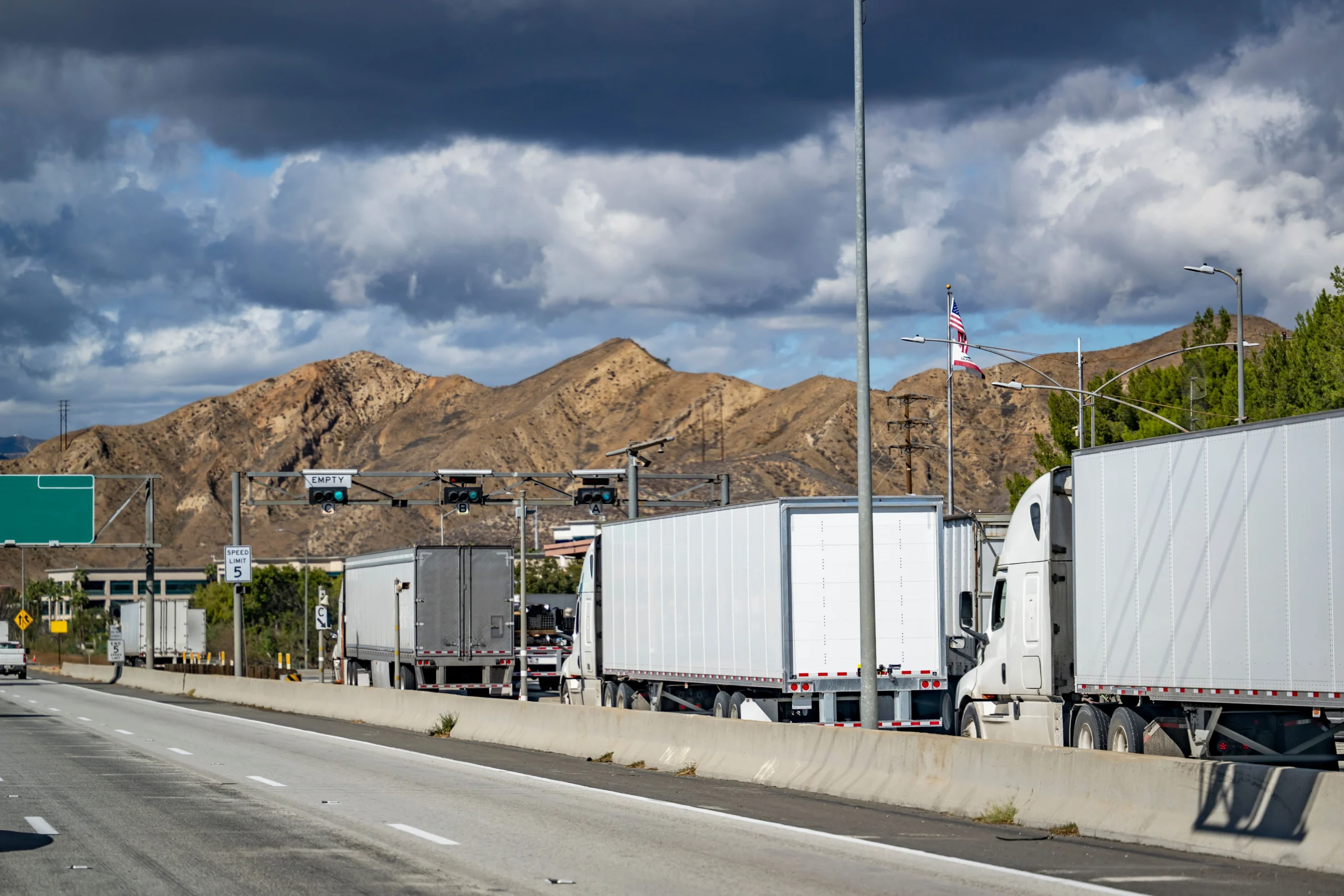
This refers to the combined weight of your truck and any trailer it’s towing. It essentially considers the total weight of this entire vehicle combination. Here’s what’s included in GCWR:
The weight of your loaded truck (which is your GVWR)
The weight of the trailer itself (unloaded)
The cargo you’re carrying in the trailer
Think of GVWR as the maximum weight limit for a single truck on a bridge. GCWR would be like the total weight limit for a truck and trailer combination on the same bridge.
There are two main ways to find your truck’s GVWR:
This is the most common location for the GVWR information. Look for a sticker on the driver’s side doorjamb (the pillar where the door closes).
This sticker will typically list various weight ratings for your truck, including the GVWR. It might be labeled as “GVWR” or “Gross Vehicle Weight.”
If you can’t find the sticker on the doorjamb, your truck’s owner’s manual will definitely have the GVWR listed. Consult the section on weight specifications or vehicle capacities.
The owner’s manual might also provide additional information about other weight ratings like curb weight and payload capacity.
The GVWR might also be located on a metal plate riveted to the frame of the truck, but the doorjamb sticker and owner’s manual are the most common places to find it.
If you’re still having trouble locating the GVWR, you can try contacting the vehicle manufacturer’s customer service or searching online for your specific truck model’s weight specifications.

Staying within your GVWR isn’t just about safety and avoiding fines; it can also impact your insurance. Many trucking insurance policies have clauses that deny coverage or increase premiums if the truck is found to be overloaded during an accident.
By understanding and respecting your GVWR, you’re not only protecting yourself and others on the road, but you’re also ensuring you have the proper coverage in case of an unforeseen event. Make GVWR a key part of your pre-trip inspection routine and operate your truck safely and responsibly.
Prioritize the well-being of your fleet and get protected with proactive insurance management with our Premium Control Plan (PCP). Take control of your insurance costs today with a free trucking insurance quote or contact us today to learn more how PCP can redefine your insurance experience.
To take the first step towards safeguarding your dreams with Commercial Trucking Insurance, simply click the Request a Quote button to fill out our quick and easy quote form. Alternatively, you can reach out to our dedicated expert, Ash, at ash@dreamassurancegroup.com via email. Don’t let uncertainty hold you back; embrace the assurance of tomorrow, today.
Look at these related posts!